PROTEC GAS
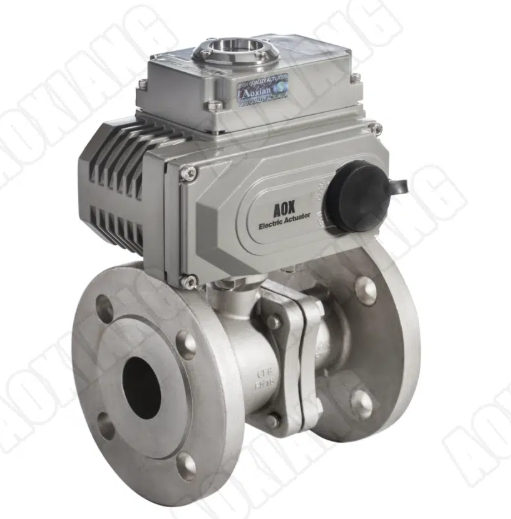
Electric Ball Valve
Electric Ball Valve
Couldn't load pickup availability
Nominal Size: DN15~DN400(mm)
Working Pressure: 1.0, 1.6, 2.5, 4.0, 6.4MPa
Applicable Fluids: Water, oil, nitric acid, acetic acid, viscous fluids, slurries, and strongly oxidizing substances
Operating Temperature Range: -40℃~+180℃, -40℃~+350℃
Product Introduction:
The electric ball valve is a quarter-turn rotary ball valve with excellent sealing performance, large flow capacity, low flow resistance, simple structure, easy maintenance, and long service life. The valve body passage and connection pipe diameter are equal and form a straight line, allowing the medium to flow through with almost no loss. Equipped with AOX series high-performance actuators, the product is commonly used in applications with strict sealing requirements. In addition to controlling gases, liquids, and steam, it is also suitable for controlling wastewater and media containing fibrous impurities. It is widely used in petroleum, chemical, metallurgical, light industry, papermaking, power plants, refrigeration, and other industries.
Product Features:
- Low Fluid Resistance: Ball valves offer the lowest fluid resistance among all valve types. Even reduced-bore ball valves have relatively low fluid resistance.
- Thrust Bearings Reduce Stem Friction: Thrust bearings reduce stem friction torque, ensuring long-term smooth and balanced operation of the valve stem.
- Excellent Seat Sealing: The use of materials like PTFE for sealing rings makes the structure easy to seal, and the sealing capability of the ball valve increases with increasing medium pressure.
- Reliable Stem Seal: Since the stem only rotates and does not undergo linear motion, the stem packing seal is not easily damaged, and the sealing capability increases with increasing medium pressure.
- Long Service Life: Due to the excellent self-lubricating properties of materials like PTFE, the friction loss with the ball is small, contributing to the long service life of the ball valve.
- Bottom-Entry Stem and Stem Shoulder: The bottom-entry stem and stem shoulder prevent the stem from extruding. In case of fire causing damage to the stem seal, the shoulder can still form a metal-to-metal contact with the body, ensuring stem sealing.
Share